
Radioactivity, Nuclear Physics and its Medical Applications
124 The Physics and Consequences of Nuclear Weapons
Learning Objectives
- Distinguish between fission and thermonuclear (fusion) weapons.
- Explain how uncontrolled nuclear chain reactions release enormous amounts of energy.
- Describe the major forms of energy produced during a nuclear explosion.
- Discuss the immediate and long-term health effects of nuclear explosions and ionizing radiation.
- Recognize the importance of radiation protection and international efforts to reduce the risks associated with nuclear weapons.
In previous chapters, we explored how nuclear reactions release energy through fission and fusion. Those same physical principles have been applied in technologies that benefit society, including nuclear power generation, cancer treatments, medical imaging, and the production of radioactive isotopes used in diagnosis and therapy. However, the same processes can also release energy in an uncontrolled manner, producing some of the most destructive events ever created by humans.
This chapter examines the physics behind nuclear explosions while emphasizing their consequences rather than their engineering. Understanding how nuclear reactions release energy provides insight into why nuclear weapons differ so dramatically from conventional explosives and why they produce unique hazards, including intense blast waves, extreme heat, and ionizing radiation.
The development of nuclear weapons also represents an important moment in the history of science. Discoveries in nuclear physics that expanded our understanding of matter quickly led to technologies with profound military, political, and humanitarian consequences. Today, the same scientific principles continue to support peaceful applications in medicine, industry, and scientific research while also motivating international efforts to reduce the risks associated with nuclear weapons.
Physics in Healthcare
Although this chapter focuses on nuclear explosions, many of the underlying concepts are directly relevant to healthcare. Radiation dose, shielding, radioactive decay, and the biological effects of ionizing radiation are fundamental topics in radiation oncology, nuclear medicine, diagnostic imaging, radiation safety, and emergency medicine. Understanding how radiation interacts with living tissue helps healthcare professionals both use radiation safely and respond effectively to radiological emergencies.
Nuclear Energy Released in an Instant
Chemical explosives, such as TNT, release energy by rearranging chemical bonds between atoms. Nuclear weapons release energy through changes within the atomic nucleus itself. Because nuclear binding energies are millions of times larger than typical chemical bond energies, a relatively small amount of nuclear fuel can release an enormous amount of energy.
In a nuclear explosion, this energy is released in a fraction of a second. A rapidly multiplying chain reaction converts a small amount of mass into energy according to Einstein's famous relationship
Although only a few grams of matter may be converted directly into energy, the enormous value of the speed of light means that this small loss of mass corresponds to an immense energy release. The result is an intense fireball, a powerful blast wave, and large amounts of ionizing radiation that spread outward from the explosion.
The total energy released by nuclear explosions is commonly expressed in kilotons (kT) or megatons (MT) of TNT equivalent. One kiloton corresponds to the energy released by approximately 1,000 tons of TNT, while one megaton is equal to 1 million tons of TNT. These units provide a convenient way to compare the energy released by different explosions without referring to the specific nuclear reactions involved.
Fission and Thermonuclear Weapons
Nuclear weapons are commonly classified into two broad categories based on the nuclear reactions responsible for releasing their energy:
- Fission weapons, which obtain their energy from the rapid splitting of heavy atomic nuclei such as uranium-235 or plutonium-239.
- Thermonuclear (fusion) weapons, which use a fission explosion to initiate nuclear fusion, allowing much larger amounts of energy to be released.
Although the underlying nuclear reactions differ, both types of weapons rely on the same physical principle: converting a very small amount of mass into an enormous amount of energy. The difference lies primarily in how that energy is generated and how much fuel participates in the reaction.
Fission Weapons
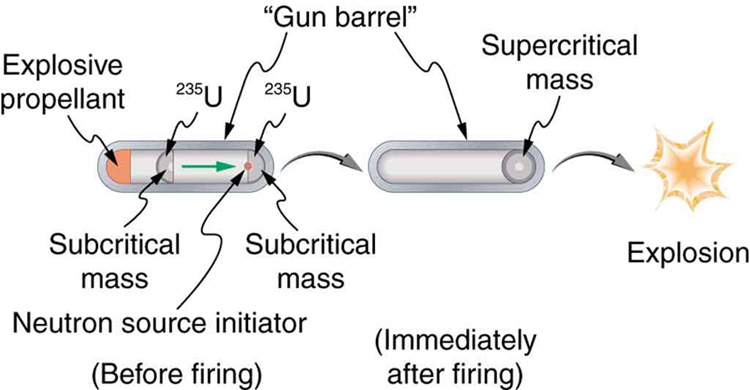
A nuclear fission reaction occurs when the nucleus of a heavy atom splits into two smaller nuclei after absorbing a neutron. Each fission event releases energy, several additional neutrons, and gamma rays. If enough fissile material is present, these newly released neutrons trigger additional fission reactions, creating a rapidly growing chain reaction.
Under controlled conditions, such as inside a nuclear power reactor, this chain reaction is carefully regulated so that energy is released gradually over months or years. In contrast, a nuclear explosion occurs when an uncontrolled chain reaction develops in an extremely short time. Within less than a millionth of a second, an enormous number of nuclei undergo fission, releasing tremendous amounts of energy almost simultaneously.
The energy released during fission appears in several forms, including:
- kinetic energy of the fission fragments,
- gamma radiation,
- kinetic energy of emitted neutrons, and
- thermal energy generated as these particles rapidly collide with surrounding matter.
Because the reaction occurs so quickly, temperatures rise to millions of degrees Celsius, producing an expanding fireball that heats the surrounding air almost instantaneously. This rapid heating generates an intense pressure wave, commonly called the blast wave, which is responsible for much of the structural damage caused by a nuclear explosion.
Physics in Healthcare
The distinction between controlled and uncontrolled chain reactions is central to many healthcare technologies. Nuclear reactors produce medical isotopes used in diagnostic imaging and cancer treatment by maintaining carefully controlled fission reactions. These reactors operate under conditions that are fundamentally different from the rapid, uncontrolled chain reactions associated with nuclear explosions.
Thermonuclear (Fusion) Weapons
Fusion is the process in which two light atomic nuclei combine to form a heavier nucleus. As discussed in the previous chapter, fusion releases energy because the resulting nucleus has a greater binding energy per nucleon than the original nuclei. Fusion is the process that powers the Sun and other stars.
Unlike fission, however, fusion requires extremely high temperatures and pressures before atomic nuclei can overcome their electrostatic repulsion and come close enough for the strong nuclear force to bind them together. Creating these extreme conditions is one of the greatest scientific and engineering challenges in nuclear physics.
In thermonuclear weapons, the enormous temperatures required for fusion are produced by a preceding fission explosion. Once fusion begins, additional energy is released, greatly increasing the total explosive yield compared with a fission weapon alone.
Although fusion reactions release more energy per unit mass of fuel than fission reactions, both processes ultimately obtain their energy from changes in nuclear binding energy. In each case, a tiny fraction of the original mass is converted into energy according to Einstein's equation,
Thermonuclear explosions therefore combine the enormous energy released by both fission and fusion reactions, producing the largest explosions ever created by humans.
Historical Context: From Scientific Discovery to the Nuclear Age
The discovery of nuclear fission in 1938 transformed nuclear physics almost overnight. Before then, scientists understood that enormous amounts of energy were stored within atomic nuclei, but there was no practical way to release that energy on a large scale. The discovery that neutrons could split heavy nuclei while simultaneously producing additional neutrons revealed the possibility of a self-sustaining chain reaction.
The timing of this discovery coincided with the growing political tensions that led to the Second World War. Many physicists recognized that if a chain reaction could be controlled, it could provide a powerful new source of energy. They also realized that an uncontrolled chain reaction might produce an explosive device far more powerful than any conventional weapon.
Concern that Nazi Germany might develop such a weapon prompted several refugee scientists, including Leo Szilard, to encourage Albert Einstein to write a letter to U.S. President Franklin D. Roosevelt in 1939. The letter warned that uranium could potentially be used to construct an extraordinarily powerful bomb and recommended that the United States begin its own research program.
This effort eventually became the Manhattan Project, a large scientific and engineering collaboration involving tens of thousands of scientists, engineers, technicians, and military personnel. The project produced the first controlled nuclear chain reaction in 1942 under the leadership of Enrico Fermi and culminated in the first successful nuclear explosion during the Trinity Test in New Mexico on July 16, 1945.
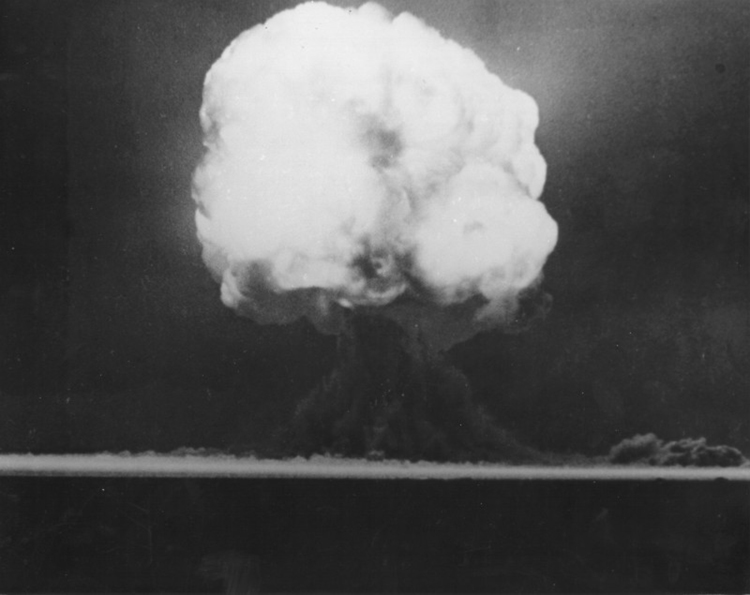
Less than one month later, nuclear weapons were used during the final days of World War II. On August 6, 1945, a uranium-based weapon was detonated over Hiroshima, Japan. Three days later, a plutonium-based weapon was detonated over Nagasaki. These explosions caused widespread destruction and resulted in the deaths of many tens of thousands of people immediately, with many additional deaths occurring in the months and years that followed because of injuries and radiation exposure.
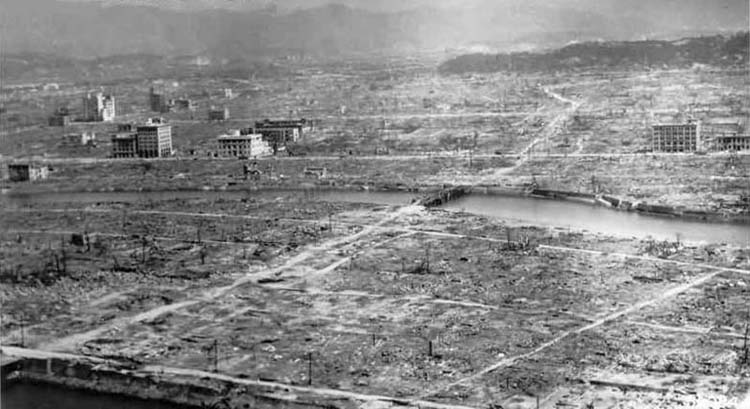
Following World War II, several nations developed nuclear weapons, leading to an international arms race during the Cold War. Thousands of nuclear weapons were produced, many with explosive yields hundreds of times greater than those used in 1945. At the same time, international organizations and treaties were established to reduce nuclear testing, limit the spread of nuclear weapons, and decrease the risk of nuclear conflict.
The history of nuclear weapons highlights the dual nature of scientific discovery. The same understanding of nuclear physics that made these weapons possible has also led to major advances in medicine, energy production, industrial technology, and scientific research. Today, nuclear science continues to improve human health through applications such as cancer radiotherapy, nuclear medicine, sterilization of medical equipment, and the production of life-saving medical isotopes.
Ethics and the Responsibility of Scientists
The development of nuclear weapons sparked lasting discussions about the ethical responsibilities of scientists and engineers. Many researchers involved in the Manhattan Project later became advocates for international cooperation, nuclear arms control, and the peaceful use of nuclear technology. Their experiences continue to influence modern discussions about emerging technologies, including artificial intelligence, biotechnology, and other fields whose discoveries may have both beneficial and harmful applications.
The Effects of a Nuclear Explosion
Although nuclear explosions differ enormously in size, they all produce the same basic forms of energy. Within a fraction of a second after detonation, the energy released by nuclear reactions is converted into an intensely hot fireball, a rapidly expanding blast wave, thermal radiation, and ionizing radiation. Together, these effects produce widespread destruction and pose serious risks to human health.
The severity of each effect depends on many factors, including the explosive yield, the altitude of the explosion, local geography, weather conditions, and the distance from the point of detonation. Understanding these physical processes helps explain both the immediate destruction caused by nuclear explosions and the long-term health consequences that can follow.
The Fireball
Immediately after a nuclear explosion, temperatures near the center of the reaction reach several million degrees Celsius—comparable to temperatures found in the interior of the Sun. At these temperatures, surrounding materials are converted into an extremely hot plasma consisting of ionized atoms, free electrons, and high-energy radiation.
This plasma forms the familiar fireball, which expands rapidly as enormous amounts of thermal energy are transferred to the surrounding air. As the fireball grows, it cools and rises because its density becomes much lower than that of the surrounding atmosphere. The rising fireball often produces the characteristic mushroom-shaped cloud associated with large nuclear explosions.
The mushroom cloud itself is not responsible for most of the destructive energy. Instead, it is a visible consequence of the rapid heating of the atmosphere and the upward movement of hot gases carrying dust and debris.
The Blast Wave
As the fireball expands, it compresses the surrounding air into a powerful shock wave. Unlike the sound waves encountered in everyday life, this shock wave travels faster than the speed of sound and is characterized by an abrupt increase in air pressure followed by extremely strong winds.
The blast wave is responsible for much of the structural damage produced by a nuclear explosion. Buildings may collapse, windows shatter over large distances, and debris becomes dangerous projectiles capable of causing severe injuries. The combination of overpressure and high-speed winds can produce injuries similar to those observed in industrial explosions, severe storms, and other large-scale disasters.
Because the blast wave spreads outward in all directions, its intensity decreases with distance from the explosion. Even so, the enormous energy released by nuclear reactions allows destructive blast effects to extend for many kilometers.
Thermal Radiation
A large fraction of the energy released during a nuclear explosion is emitted as thermal radiation, including visible light, infrared radiation, and ultraviolet radiation. This intense pulse of radiant energy travels outward at the speed of light and can ignite combustible materials long before the blast wave arrives.
For people exposed to the thermal pulse, burns may occur even at considerable distances from the explosion. The severity of these burns depends on the radiant energy received, the duration of exposure, clothing, and whether structures or terrain provide shielding.
Thermal radiation can also ignite widespread fires, creating additional hazards long after the initial explosion. Historically, many injuries following large urban fires have resulted from smoke inhalation, dehydration, and delayed access to medical care rather than from the explosion itself.
Prompt Ionizing Radiation
During the first few seconds after detonation, large numbers of gamma rays and neutrons are emitted from the nuclear reactions. This prompt ionizing radiation can penetrate living tissue and damage cells by removing electrons from atoms and molecules.
Ionizing radiation is particularly harmful because it can break chemical bonds, damage proteins, and alter DNA. Rapidly dividing cells, such as those found in bone marrow, the digestive tract, and developing embryos, are especially sensitive to radiation exposure.
The intensity of prompt radiation decreases rapidly with distance because the radiation spreads over an increasingly large area and is partially absorbed by air and surrounding materials. Buildings, soil, and other dense materials can provide significant shielding from gamma rays, while thick layers of hydrogen-rich materials such as water or concrete are effective at reducing neutron exposure.
Physics in Healthcare
The same types of ionizing radiation produced during nuclear explosions are used every day in medicine. Gamma rays are employed in cancer radiotherapy and nuclear medicine, while neutrons are being investigated for specialized cancer treatments such as boron neutron capture therapy (BNCT). The difference lies not in the type of radiation, but in the dose, location, and control of the exposure. Medical procedures deliver carefully calculated radiation doses to maximize patient benefit while minimizing damage to healthy tissue.
Radioactive Fallout and Long-Term Health Effects
Not all of the radioactive material produced during a nuclear explosion remains at the site of the detonation. Depending on the type of explosion and the surrounding environment, radioactive particles may be carried high into the atmosphere before gradually returning to Earth's surface. This radioactive material, known as fallout, can contaminate air, soil, water, buildings, food supplies, and vegetation over large areas.
Fallout is most significant when a nuclear explosion occurs at or near the ground. In these cases, large amounts of soil, rock, and building materials are drawn into the fireball, where they become contaminated with radioactive fission products. As the fireball cools, these particles settle back to Earth over hours, days, or even weeks, depending on their size and the prevailing weather conditions.
An airburst, in contrast, generally produces much less local fallout because relatively little material from the ground becomes incorporated into the fireball. For this reason, the environmental consequences of a nuclear explosion depend not only on its explosive yield but also on how and where the explosion occurs.
Acute Radiation Syndrome
People exposed to high doses of ionizing radiation over a short period of time may develop acute radiation syndrome (ARS), sometimes called radiation sickness. Unlike burns or traumatic injuries, ARS results from damage to cells throughout the body caused by ionizing radiation.
Ionizing radiation damages DNA and other essential cellular components. Cells that divide rapidly are especially vulnerable because they have less time to repair radiation-induced damage before reproducing. As a result, tissues such as bone marrow, the lining of the digestive tract, skin, and reproductive organs are particularly sensitive to high radiation doses.
The severity of acute radiation syndrome depends primarily on the absorbed radiation dose. Mild exposures may produce fatigue, nausea, or temporary decreases in blood cell counts. Higher doses can lead to severe infections, internal bleeding, dehydration, organ failure, and, in extreme cases, death despite intensive medical care.
One of the earliest symptoms of significant radiation exposure is nausea and vomiting occurring within hours after exposure. Healthcare providers use both clinical symptoms and radiation dose estimates to guide treatment and determine prognosis.
Long-Term Health Effects
Many individuals exposed to lower radiation doses survive the initial event but may experience health effects years or even decades later. The best-established long-term consequence of ionizing radiation is an increased risk of developing cancer.
Radiation-induced cancers develop because damaged DNA can sometimes be repaired incorrectly or not repaired at all. If affected cells continue to divide, mutations may accumulate over time and eventually lead to cancer. The likelihood of developing cancer generally increases with radiation dose, although many other factors—including age, genetics, and lifestyle—also influence individual risk.
Long-term studies of survivors of the Hiroshima and Nagasaki bombings, nuclear accidents, and certain occupational exposures have greatly improved our understanding of radiation risks. These studies form the scientific basis for many of the radiation safety standards used today in medicine, research laboratories, and the nuclear industry.
Environmental Contamination
Some radioactive isotopes produced during nuclear fission decay within minutes or hours, while others remain radioactive for years or even decades. As these isotopes spread through the environment, they may enter food chains, accumulate in plants and animals, or contaminate drinking water.
Certain isotopes are of particular concern because the body processes them similarly to naturally occurring elements. For example, radioactive iodine can accumulate in the thyroid gland, while radioactive strontium behaves chemically like calcium and may become incorporated into bones and teeth. Radioactive cesium distributes more broadly throughout soft tissues because it behaves similarly to potassium.
Understanding the chemistry and biological behavior of these radionuclides helps physicians and public health officials develop effective monitoring programs and medical countermeasures following radiological emergencies.
Healthcare Connection: Responding to Radiological Emergencies
Healthcare professionals play a critical role following radiological accidents or nuclear incidents. Their responsibilities include recognizing symptoms of radiation exposure, performing patient decontamination when necessary, estimating radiation dose, treating traumatic injuries and burns, managing acute radiation syndrome, and providing long-term medical follow-up.
One important principle is that contamination is different from irradiation. A person who has been exposed to radiation is not necessarily radioactive. External contamination occurs when radioactive material is present on the skin, clothing, or hair and can often be removed by carefully removing contaminated clothing and washing exposed skin. Internal contamination occurs when radioactive material is inhaled, ingested, or enters the body through wounds and may require specialized medical treatment.
Modern emergency response plans emphasize rapid assessment, decontamination, appropriate use of personal protective equipment, and clear communication with the public. Understanding the physics of radiation allows healthcare professionals to make informed decisions that protect both patients and emergency responders.
Balancing Risk and Benefit
Although nuclear explosions demonstrate the devastating consequences of uncontrolled radiation exposure, they should not be confused with the carefully controlled use of radiation in medicine. Every day, physicians use X-rays, computed tomography (CT), nuclear medicine, and radiation therapy to diagnose and treat disease. In these applications, the benefits of radiation are carefully balanced against the potential risks, and doses are kept as low as reasonably achievable while still achieving the desired medical outcome.
The same understanding of radiation physics that helps protect people during emergencies also allows healthcare professionals to use ionizing radiation safely and effectively to improve—and often save—patients' lives.
Radiation Protection and Nuclear Security
The destructive effects of nuclear explosions highlight the importance of understanding how ionizing radiation interacts with matter and how exposure can be minimized. Fortunately, the same principles of physics that explain radiation also provide effective methods for protecting individuals, healthcare workers, emergency responders, and the public.
Radiation protection is based on three fundamental principles: minimizing the time spent near a radiation source, maximizing the distance from the source, and using appropriate shielding. These simple ideas form the foundation of radiation safety programs in hospitals, research laboratories, nuclear power plants, and emergency response organizations worldwide.
Time
The radiation dose received by an individual is directly proportional to the amount of time spent near a radiation source. Reducing exposure time decreases the total dose absorbed by the body. For this reason, medical procedures involving radioactive materials are carefully planned so that staff spend as little unnecessary time as possible near patients or radioactive sources.
Distance
Radiation intensity decreases rapidly with increasing distance from its source. For many sources that emit radiation uniformly in all directions, the intensity approximately follows the inverse-square law, meaning that doubling the distance reduces the intensity to about one-fourth of its original value.
where I is the radiation intensity and r is the distance from the source.
This principle is one of the most effective methods of reducing radiation exposure and is routinely used in medicine, industry, and emergency response.
Shielding
Different types of ionizing radiation require different shielding materials because they interact with matter in different ways.
- Alpha particles are easily stopped by a sheet of paper or even the outer layer of dead skin.
- Beta particles penetrate farther but can usually be blocked by plastic, glass, or thin sheets of metal.
- Gamma rays are highly penetrating and require dense materials such as lead or thick concrete for effective shielding.
- Neutrons are best slowed and absorbed by hydrogen-rich materials such as water, polyethylene, or concrete specially designed for neutron shielding.
Choosing the appropriate shielding material depends on both the type and energy of the radiation involved.
Healthcare Connection: ALARA
Radiation workers follow the principle of ALARA, which stands for As Low As Reasonably Achievable. ALARA recognizes that although radiation is an essential tool in modern medicine, every unnecessary exposure should be avoided. Hospitals implement ALARA through careful procedure planning, shielding, distance, exposure monitoring, and continuous staff training.
Patients also benefit from ALARA. Imaging procedures such as CT scans and nuclear medicine examinations are performed only when the expected diagnostic or therapeutic benefit outweighs the small risks associated with radiation exposure. Advances in detector technology and image-processing algorithms continue to reduce patient doses while maintaining excellent image quality.
International Cooperation and Nuclear Security
Because the consequences of nuclear weapons extend far beyond national borders, international cooperation plays an essential role in reducing nuclear risks. Numerous treaties and international organizations work to limit the spread of nuclear weapons, monitor nuclear materials, promote peaceful applications of nuclear technology, and improve preparedness for radiological emergencies.
Organizations such as the International Atomic Energy Agency (IAEA) support the safe use of nuclear technology in medicine, agriculture, industry, and scientific research while helping countries strengthen nuclear security and radiation protection programs.
Hospitals, research institutions, and public health agencies also participate in national and international emergency preparedness exercises to ensure that healthcare systems can respond effectively to radiological incidents. These plans include rapid radiation monitoring, medical triage, decontamination procedures, public communication, and coordination among local, national, and international agencies.
Looking Forward
Nuclear physics has profoundly influenced modern society. The same scientific discoveries that led to nuclear weapons also made possible many technologies that improve human health and quality of life. Nuclear medicine allows physicians to diagnose disease, radiation therapy saves the lives of millions of cancer patients, sterilization techniques improve patient safety, and nuclear reactors produce many of the medical isotopes used throughout the world.
Understanding the physics of nuclear reactions therefore serves two important purposes. It helps us appreciate the tremendous benefits that nuclear science has brought to medicine and society while reminding us of the responsibility to use this knowledge safely, ethically, and peacefully. For healthcare professionals, this understanding provides the scientific foundation needed to protect patients, respond to radiological emergencies, and use radiation responsibly in clinical practice.
Nuclear Physics Beyond Weapons
For many people, the phrase nuclear physics immediately brings to mind nuclear weapons. However, these represent only one application of a broad scientific field that has transformed medicine, industry, energy production, and scientific research.
Today, radioactive isotopes are routinely used to diagnose disease, guide surgical procedures, sterilize medical equipment, and treat cancer. Imaging techniques such as positron emission tomography (PET) and single-photon emission computed tomography (SPECT) allow physicians to observe physiological processes inside the living body, while radiation therapy has become one of the primary treatments for many forms of cancer.
Beyond healthcare, nuclear science contributes to electricity generation, food preservation, industrial inspection, archaeological dating, environmental monitoring, and space exploration. Researchers continue to investigate new applications of nuclear technology, including advanced cancer therapies, targeted radionuclide treatments, fusion energy, and improved methods for producing medical isotopes.
The history of nuclear weapons reminds us that scientific discoveries can have profound consequences for society. At the same time, the many peaceful applications of nuclear physics demonstrate how scientific knowledge can improve human health and quality of life when applied responsibly.
Chapter Takeaway
Understanding nuclear physics is not simply about learning how enormous amounts of energy can be released. For healthcare professionals, it provides the scientific foundation for using radiation safely, interpreting medical images, treating cancer, protecting patients and staff from unnecessary radiation exposure, and responding effectively to radiological emergencies. The greatest impact of nuclear physics today is found not on the battlefield, but in hospitals, research laboratories, and public health systems around the world.
Chapter Summary
- Nuclear weapons release energy by converting a small amount of mass into a large amount of energy according to Einstein's equation, E = mc2.
- Fission weapons obtain their energy from uncontrolled nuclear chain reactions involving heavy nuclei such as uranium-235 or plutonium-239. Thermonuclear weapons use a fission reaction to initiate nuclear fusion, producing much larger energy releases.
- The energy from a nuclear explosion appears primarily as an expanding fireball, a powerful blast wave, thermal radiation, and ionizing radiation. Together, these effects are responsible for widespread destruction and severe injuries.
- Prompt gamma rays and neutrons can damage living tissue by ionizing atoms and molecules, while radioactive fallout may contaminate the environment and expose people to radiation long after the initial explosion.
- High doses of ionizing radiation delivered over a short period can produce acute radiation syndrome (ARS), while lower doses may increase the long-term risk of cancer and other radiation-related health effects.
- The biological effects of radiation depend on both the absorbed dose and the radiosensitivity of different tissues. Rapidly dividing cells, including those in bone marrow and the digestive tract, are generally the most sensitive to radiation damage.
- Radiation protection is based on three fundamental principles: minimizing time near a radiation source, maximizing distance, and using appropriate shielding. These principles are used routinely in medicine, research, industry, and emergency response.
- Healthcare professionals distinguish between irradiation, in which a person is exposed to radiation, and contamination, in which radioactive material is present on or inside the body. Understanding this distinction is essential for appropriate medical treatment during radiological emergencies.
- The principle of ALARA (As Low As Reasonably Achievable) guides the safe use of ionizing radiation in healthcare by minimizing unnecessary radiation exposure while preserving the diagnostic or therapeutic benefits of medical procedures.
- Although nuclear weapons represent one application of nuclear physics, the same scientific principles support many beneficial technologies, including medical imaging, radiation therapy, nuclear medicine, sterilization of medical equipment, scientific research, and the production of medical isotopes that improve patient care worldwide.
Conceptual Questions
- Explain why a controlled chain reaction in a nuclear reactor can be used to produce energy and medical isotopes, whereas an uncontrolled chain reaction can release energy explosively.
- A nuclear explosion releases energy as blast, thermal radiation, and ionizing radiation. Explain why these effects do not necessarily reach a person or structure at the same time.
- Explain the difference between irradiation and radioactive contamination. Why is a person who has been exposed to radiation not necessarily radioactive?
- Fallout from atmospheric nuclear tests included substantial amounts of [latex]{}^{90}\text{Sr}[/latex] and [latex]{}^{137}\text{Cs}[/latex], which have half-lives of 28.6 y and 30.1 y, respectively. Environmental activities of these isotopes may decrease faster than would be predicted from radioactive decay alone. What physical, chemical, or biological processes might explain this observation?
Problems & Exercises
- Find the mass converted into energy by an explosion with an energy yield equivalent to 12.0 kT of TNT. Use
[latex]1.00\text{ kT}=4.184\times10^{12}\text{ J}.[/latex]
- What mass is converted into energy by an explosion with an energy yield equivalent to 1.00 MT of TNT? Use
[latex]1.00\text{ MT}=4.184\times10^{15}\text{ J}.[/latex]
- Neutrons can produce tritium through the nuclear reaction
[latex]n+{}^{6}\text{Li}\rightarrow{}^{3}\text{H}+{}^{4}\text{He}.[/latex]
Calculate the energy released by this reaction in MeV.
- Assume that a collection of nuclear devices has a combined explosive yield of 4,000 MT.
- Convert this amount of energy to kilowatt-hours, noting that
[latex]1\text{ kW}\cdot\text{h}=3.60\times10^{6}\text{ J}.[/latex]
- What would be the monetary value of this energy if it could be converted completely into electricity valued at $0.10 per kW·h?
- Convert this amount of energy to kilowatt-hours, noting that
- A healthcare worker spends 12.0 min near a radioactive source instead of the planned 6.00 min. Assume that the dose rate remains constant.
- By what factor does the worker's radiation dose increase?
- If the dose rate is [latex]0.250\text{ mSv/h}[/latex], calculate the dose received during the 12.0-min exposure.
- How many [latex]{}^{239}\text{Pu}[/latex] nuclei must undergo fission to produce an energy yield equivalent to 20.0 kT of TNT, assuming that each fission releases 200 MeV?
- Calculate the number of fissions required.
- Calculate the mass of this amount of [latex]{}^{239}\text{Pu}[/latex].
- Assume that one-fourth of the energy released by a 320-kT thermonuclear explosion comes from fission reactions averaging 200 MeV per reaction, while the remaining energy comes from fusion reactions averaging 20 MeV per reaction.
- Calculate the number of fission reactions and the approximate mass of material that undergoes fission. Use an average atomic mass of 238 u.
- Calculate the number of fusion reactions and the approximate mass of fusion fuel consumed. Assume that the two nuclei participating in each fusion reaction have a combined atomic mass of 5 u.
- Compare the calculated masses of nuclear fuel with the total energy released. What does this comparison demonstrate about the energy available from changes in nuclear binding energy?
- This problem illustrates the magnitude of an energy yield equivalent to 1.00 kT of TNT. Assume that half of this energy is converted into gravitational potential energy and used to lift an object with a mass of 90,000 metric tons. How high would the object be lifted? Neglect air resistance and other energy losses.
- Atmospheric nuclear tests are estimated to have deposited approximately 9.0 MCi of [latex]{}^{90}\text{Sr}[/latex] on Earth's surface. Find the mass of this amount of [latex]{}^{90}\text{Sr}[/latex]. The half-life of [latex]{}^{90}\text{Sr}[/latex] is 28.6 y.
- An explosion with an energy yield equivalent to 1.00 MT of TNT deposits 25.0% of its energy as radiant heat.
- Find the thermal energy received per square centimeter at a distance of 10.0 km, assuming that the energy is distributed uniformly over a spherical surface of that radius.
- If this energy is absorbed uniformly by a layer of body tissue 1.00 cm deep, calculate the resulting temperature increase. Approximate the tissue as water with a density of [latex]1.00\text{ g/cm}^{3}[/latex] and a specific heat capacity of [latex]1.00\text{ cal/(g}\cdot{}^\circ\text{C)}[/latex].
- Integrated Concepts A hypothetical energy reserve contains a total energy equivalent to 4,000 MT of TNT. Suppose that energy equivalent to 1.00 MT of TNT is released each day and converted into electricity with an efficiency of 10.0%.
- What would be the average electrical power output?
- For how many years would the energy reserve last at this rate?
Glossary
- acute radiation syndrome (ARS)
- A collection of health effects caused by exposure to a high dose of ionizing radiation over a short period of time. Symptoms may include nausea, vomiting, fatigue, decreased blood cell counts, infections, and organ damage.
- ALARA
- An acronym for As Low As Reasonably Achievable, the guiding principle of radiation protection that seeks to minimize unnecessary radiation exposure while achieving the intended medical or scientific objective.
- blast wave
- A rapidly moving region of extremely high pressure produced by an explosion that can damage structures and cause traumatic injuries.
- chain reaction
- A self-sustaining sequence of nuclear reactions in which neutrons released by one fission event trigger additional fission reactions.
- fallout
- Radioactive particles produced during a nuclear explosion that settle from the atmosphere onto Earth's surface, potentially contaminating air, water, soil, and food.
- fireball
- The extremely hot, expanding region of plasma formed immediately after a nuclear explosion.
- fission weapon
- A nuclear weapon that releases energy primarily through the uncontrolled fission of heavy atomic nuclei.
- fusion (thermonuclear) weapon
- A nuclear weapon that uses a fission reaction to initiate nuclear fusion, allowing much larger amounts of energy to be released.
- irradiation
- Exposure of a person or object to ionizing radiation without necessarily becoming contaminated by radioactive material.
- ionizing radiation
- Radiation with enough energy to remove electrons from atoms or molecules, producing ions and potentially damaging biological tissue.
- kiloton (kT)
- A unit used to express explosive energy equivalent to the energy released by 1,000 tons of TNT.
- megaton (MT)
- A unit used to express explosive energy equivalent to the energy released by 1 million tons of TNT.
- prompt radiation
- Gamma rays and neutrons emitted during the first moments of a nuclear explosion.
- radioactive contamination
- The presence of radioactive material on or inside a person, object, or environment.
- radionuclide
- An unstable isotope that undergoes radioactive decay while emitting ionizing radiation.
- radiation protection
- The science and practice of minimizing unnecessary exposure to ionizing radiation through appropriate use of time, distance, shielding, and safe work practices.
- shock wave
- A high-pressure wave that travels faster than the speed of sound and is responsible for much of the physical damage caused by explosions.
- thermal radiation
- Electromagnetic radiation, including visible, infrared, and ultraviolet light, emitted by the intensely hot fireball of a nuclear explosion.
A collection of health effects caused by exposure to a high dose of ionizing radiation over a short period of time. Symptoms may include nausea, vomiting, fatigue, decreased blood cell counts, infections, and organ damage.
An acronym for As Low As Reasonably Achievable, the guiding principle of radiation protection that seeks to minimize unnecessary radiation exposure while achieving the intended medical or scientific objective.
A rapidly moving region of extremely high pressure produced by an explosion that can damage structures and cause traumatic injuries.
A self-sustaining sequence of nuclear reactions in which neutrons released by one fission event trigger additional fission reactions.
Radioactive particles produced during a nuclear explosion that settle from the atmosphere onto Earth's surface, potentially contaminating air, water, soil, and food.
The extremely hot, expanding region of plasma formed immediately after a nuclear explosion.
A nuclear weapon that releases energy primarily through the uncontrolled fission of heavy atomic nuclei.
A nuclear weapon that uses a fission reaction to initiate nuclear fusion, allowing much larger amounts of energy to be released.
Exposure of a person or object to ionizing radiation without necessarily becoming contaminated by radioactive material.
Electromagnetic radiation whose individual photons carry enough energy to remove electrons from atoms or molecules.
A unit used to express explosive energy equivalent to the energy released by 1,000 tons of TNT.
A unit used to express explosive energy equivalent to the energy released by 1 million tons of TNT.
Gamma rays and neutrons emitted during the first moments of a nuclear explosion.
The presence of radioactive material on or inside a person, object, or environment.
An unstable isotope that undergoes radioactive decay while emitting ionizing radiation.
The science and practice of minimizing unnecessary exposure to ionizing radiation through appropriate use of time, distance, shielding, and safe work practices.
A high-pressure wave that travels faster than the speed of sound and is responsible for much of the physical damage caused by explosions.
Electromagnetic radiation, including visible, infrared, and ultraviolet light, emitted by the intensely hot fireball of a nuclear explosion.
