
Particle Physics and Frontiers of Physics
137 Frontiers of Physics
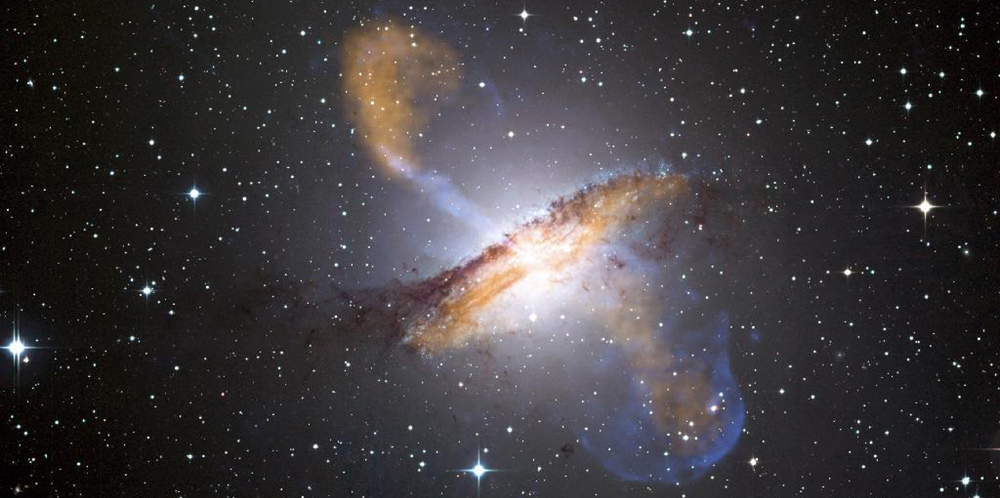
Physics is a continually evolving science. Every major discovery answers important questions while revealing new mysteries waiting to be explored. From the smallest known particles to the largest structures in the universe, physicists seek to understand the fundamental laws that govern matter, energy, space, and time. Each advance deepens our understanding of nature while reminding us that there is still much to learn.
Throughout this textbook, you have developed the concepts, mathematical tools, and problem-solving skills needed to describe a wide range of physical phenomena. You have learned how motion, forces, energy, electricity, magnetism, waves, relativity, quantum mechanics, and particle physics are connected through a relatively small set of physical principles. These connections illustrate one of the greatest strengths of physics: seemingly unrelated phenomena often arise from the same underlying laws.
In this final chapter, we step beyond well-established topics and explore several frontiers of modern physics. Some of these subjects are active areas of research where new discoveries are made every year, while others remain among the greatest unsolved problems in science. Although many questions remain unanswered, the pursuit of these answers continues to drive advances in physics, astronomy, medicine, engineering, and technology. The journey of discovery is far from over, and today’s students may help answer the questions that shape tomorrow’s understanding of the universe.
